
Restore
With coral reefs being wiped out and many corals on the edge of extinction, can coral reef restoration projects provide a solution?
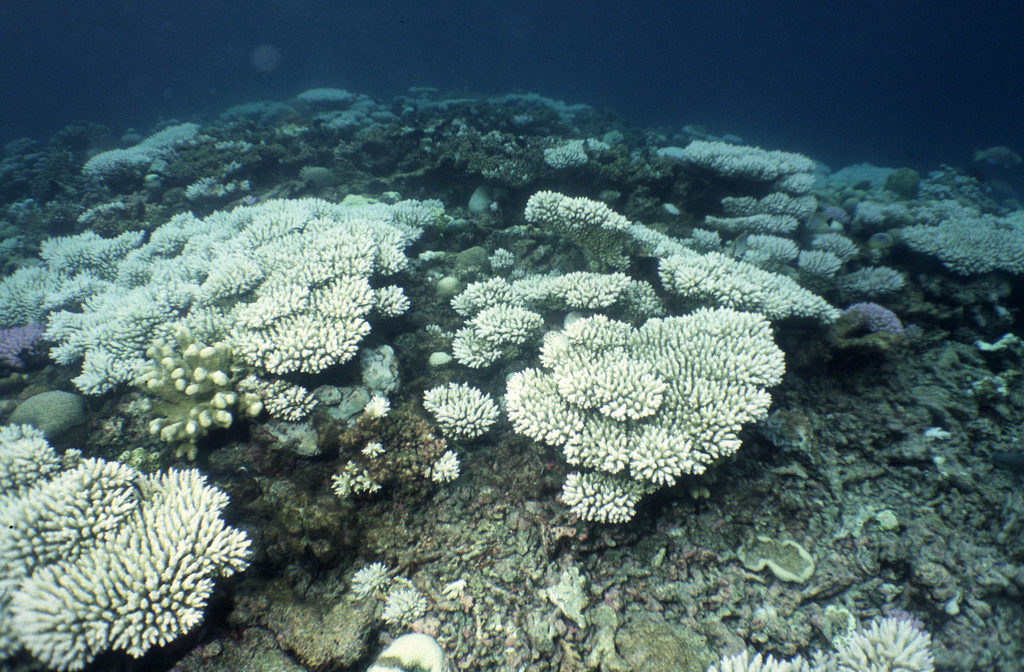
The Great Barrier Reef: 50% of corals lost over the last 30 years.
The Caribbean: 80% of corals wiped out.
With figures like this, it is not surprising that coral restoration is attracting a great deal of research. In areas where coral reefs have been severely degraded by human activities, the focus is often on trying to restore them using a variety of different techniques. These may involve growing corals in a nursery then outplanting them, or the creation of artificial reefs, among other methods.
However, according to Dr.Craig Downs, Executive Director of the Haereticus Environmental Laboratory, much of the restoration work around the world fails because it does not take into account key stages of the process required for restoration to be successful.
Dr. Downs argues that there need to be four components to effective coral restoration:
-
Psychological/Social acceptance that reefs are degraded
-
‘Forensic investigation’ into causes and relative contributions of each causal factor in producing a degraded environment
-
Strategizing and implementing measures which mitigate these causal degradative factors
-
Naturally or artificially accelerated restoration
Restoration projects are often unsuccessful because they fail to take into account one or more of the stages above. For example, if the causes and contributions of factors causing reef degradation are not understood, or if no measures are put in place to mitigate against them, then why would coral restoration work in that same environment?
Below, we showcase some interesting and effective coral restoration projects underway around the world.
“Coral reefs are one of the fastest failing ecosystems on the planet.”
 The focus of the Global Coral Repository is on developing technology to help safeguard coral reefs and “preserve the planet’s entire stock of coral biodiversity for future generations”.
TGCR is a partnership, led by Craig Downs, between Haereticus Labs, the Zoological Society of London (ZSL) and Oxford University. It aims to cryo-preserve and archive every species of coral on the planet. Samples from the archive can then be used for environmental restoration initiatives. This type of restoration can only take place once issues of water quality have been addressed, so another vital element of TGCR’s work is to understand the factors causing coral reef decline in the first place and to collaborate with various different institutions, organisations and stakeholders to mitigate damaging activities.
http://www.coralrepository.org/index.html
More to follow…
Fondation pour la Protection de la Biodiversité Marine (FoProBim)
More to follow…